|
The history of the Micro Processor
- By Eric Wolff
 As AMD and Intel release new generations of processors, the process used to create the chips
become more and more sophisticated. As processors get faster, they also become more complex
and shrink in size. Current processors are almost half the size of their predecessors. And as
technology changes, the size and speed of the processors are not the only thing that change.
As AMD and Intel release new generations of processors, the process used to create the chips
become more and more sophisticated. As processors get faster, they also become more complex
and shrink in size. Current processors are almost half the size of their predecessors. And as
technology changes, the size and speed of the processors are not the only thing that change.
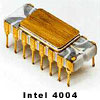
Intel has been developing processors since 1971. Their first processor known as the 4004 was
used to power a calculator and only had 108 kHz of processing power. To give you an idea of the
speed of this processor, you would need 20,000 of these processors to match the raw processing
potential of one 2.0 GHz processor. The following year, Intel released the 8008 processor which
powered one of the first personal computers ever built. In following years, Intel released the 8080
and 8086 processors. Each processor was more powerful than the previous, but they were not able
to run software that was designed for previous micro-processors.
In 1982, Intel released their landmark processor, the 286. The 286 was the first micro-
processor that was able to run software that was originally designed for processors from previous
generations. By this time personal computers were starting to become more common, but they
were still very expensive. 1985 was another important year for Intel with their release of the 386
processor. The 386 was the first 32-bit processor and the first "multi-tasking" processor. With a 386
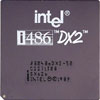
you could now run more than one program at a time. Intel next released the 486 processor in 1989
which featured a "math coprocessor". This enabled the processor to perform tasks much faster than
previous processors.
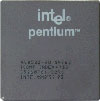
1993 marked the release of the first Pentium processor. Clocking in at 60 MHz, the first
Pentium processor was exceptionally fast for its time. The Pentium also made it possible to easily
handle more complex data like sound and images. The Pentium is also known for its infamous
floating point bug. Early versions of the Pentium processor suffered from a bug that caused the
processor to compute a complex formula incorrectly. For the next four years Intel released faster
versions of their Pentium processor which reached its peak speed of 233 MHz by 1996.
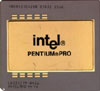
In 1995, Intel released the Pentium Pro processor. The Pentium Pro featured a second level of
cache which allowed the processor to compute data at a faster rate. These processors were
designed for computers that would be performing more advanced tasks like computer aided drafting
and scientific calculations. The Pentium Pro was eventually succeeded by the Xeon processor which
is used today in high end workstations and servers.
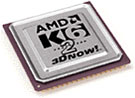
1997 was a huge year for the computer industry. Advanced Micro Devices (AMD) released its
K6 processor early in 1997 to critical acclaim. AMD had been developing processors for a number of
years by this time, but the K6 was the first AMD processor that was embraced by the computer
industry. And for a brief period of time, AMD had the fastest processor on the market until the
Pentium II came out. This was the beginning of the processor wars which would lead to drastic
decreases in the cost of a personal computer. The Pentium II was also the first processor to be able
to easily handle video.
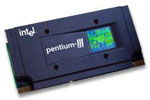
In 1999, Intel released the Pentium III, the Celeron, and A Pentium III based Xeon processor.
Intel decided to release a low budget processor known as the Celeron to combat AMD who was
selling their processors for substantially less than Intel. Initially, the Celeron was met with negative
publicity, because Intel released the processor with no on board cache to lower the production cost
of the processor. The result of this was a processor that had horrible performance. Intel quickly
rectified this by adding a small amount of cache to the Celeron to increase its performance. Today
the main difference between the Pentium and the Celeron is the reduced size of the cache and
slightly slower processor speeds. Intel and AMD reached another landmark during this generation
of processors by surpassing the 1,000 MHz barrier (1.0 GHz).
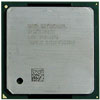
The dawn of the century brought forth a new generation of processors. Intel had their Pentium
IV processor and AMD had their Athlon processor. The first batch of Pentium IV processors featured
some new instruction sets and faster processor speeds, but their performance was not that much
better than the Pentium III. During this time AMD was able to steal away a huge chunk of Intel
followers with better performing chips that cost less. To combat AMD, Intel re-designed the Pentium
IV chip to increase its performance. These new processors are the size of a quarter, and have the
performance of a Ferrari.
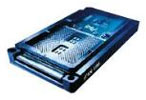
Intel also released the first true 64 bit processor in 2000 known as the Itanium. These
processors were designed for super high end servers that need to perform thousands of tasks in
seconds. The advantage of 64 bit technology is that these processors can complete complex
operations twice as fast as a 32 bit processor can. But Intel in their infinite wisdom decided that the
desktop market had no need for 64 bit technology, so they decided that 64 bit architecture would be
exclusive to the Itanium. This would later come back to haunt them.

Currently Intel is in the process of releasing its second major re-design of the Pentium IV
architecture which will eventually lead to the Pentium V processor. These new processors also bring
many new technologies to the computer industry including PCI Express and DDR2 memory. AMD is
also enjoying success with their current line of Athlon 64 processors. The Athlon 64 is the first
desktop processor to be able to perform 64 bit operations. Although the Athlon 64 is not a true 64
bit architecture like the Itanium, the Athlon 64 boasts impressive performance boosts over Intel's
32 bit offerings.
With Intel and AMD constantly locked in a struggle for supremacy, one thing is for certain; in
the end the end user is the winner. Competition leads to better technology and lower prices. Ten
years ago, the average price of a desktop computer was 2,000.00. Now the average price of a
desktop computer is less than half of that.
Eric Wolff,
Ulink’s “Hardware Guy”
thehardwareguy@ulink.net
|